
Shubhra’s Article

This category represents all the article written by Shubhra in various publications.

Hindustan Times, Shubhra's Article

Verdict in Dec 16 case not an end, cities must be made safer

Finally, the verdict has come. Seven years after the December 16 gang rape and subsequent death of the woman, death warrants were issued against the four perpetrators recently. The verdict is not just a vindication of a long legal battle fought by her parents, but also a strong signal that such heinous crimes will be treated with zero tolerance. In many ways, the case was a turning point in bringing women’s safety centre stage in India; the huge public outcry compelled the government to re-look at laws to protect women. But, have we really learnt our lessons? It does not seem so. Rapes, physical assaults, molestations continue to be reported from all parts of the country. One can argue that these incidents may be increasing as more cases are now being reported because of heightened public awareness. While an increase in numbers is good from this perspective, what is worrisome is that neither are we working to bring deep-rooted attitudinal shifts in our society nor improving our infrastructure improvements to help women feel safer. Let us revisit some of issues. The fact that the Nibhaya incident took place in a private bus underscores the need for safe and reliable public transport system. Private transport is invariably non-regulated and may employ unregistered, ad hoc drivers and conductors. The drivers are not well-trained and often fail to produce driving licence, when checked. On the other hand, public transport buses have registered drivers and conductors with permanent jobs, which may act as an incentive against misconduct towards women. Private means of transport proliferate when the public transport system is inadequate. It is high time that cities boost their public transport system, and make them accessible and reliable. Women need to move out of their homes/safe spaces at odd hours for a variety of reasons. They may need to travel for work late at night or early in the morning, to catch a flight, to buy emergency medicines/groceries or just for entertainment. On December 16, 2012, the woman, too, was returning late in the evening after watching a movie with a friend. One cannot restrict women from stepping out at night. Cities need to make public places safer by ensuring there are proper pavements and lighting. The more we use public spaces, the more vibrant and safer they become. Cases of misdemeanour can be checked before they spiral; police intervention or medical aid can be sought faster; there is a greater probability of eye-witnesses all of which help build a strong case. Prevention needs to start from an early age. Very few schools have adequate age-appropriate gender sensitisation programmes on an ongoing basis, starting from an early age right up to late teens. Therefore, gender conversations must begin at home and reinforced within informal communities. Fathers, mothers, sisters must talk to their sons and brothers about gender equality and respecting women. Children must be encouraged to talk about their feelings within the family. A vigilant family will catch the early signs of unwarranted behaviours and attitudes and nip it at the bud. Underlying societal values need to be challenged Clearly, just education and pro-women laws are not enough to prevent such crimes. We need to identify the underlying basis of patriarchy, masculinity and gender stereotypes in our society and address them appropriately. A study conducted a few years ago by the International Centre for Research on Women and the United Nations Fund for Population Activities, revealed that the average Indian man is “convinced that masculinity is about acting tough, freely exercising his privilege to lay down the rules in personal relationships and, above all, controlling women”. Such a warped sense of gender identity often becomes the basis for violent crimes. Besides, negative influence of movies and easy access to questionable content on the internet makes things worse. The Indian film industry is notorious for propagating certain inappropriate behaviours as “cool”. Rape cases must be dealt with expeditiously Despite the December 16 case trial being handled by a fast-track court and while it being a seemingly open-and-shut case, it took seven years to deliver the verdict. The government has set up over 1,000 fast-track courts in the country for disposal of rape and child sexual offence cases. Hopefully, this should help in quick clearance of cases. Due to delays, the perpetrators may feel that they have a good chance of evading persecution. Take for instance, the recent Hyderabad case, where four accused of gang raping and murdering a veterinarian were killed in a police encounter when they allegedly tried to run away, was hailed by many as “immediate justice”. This sets in a wrong precedence and makes people lose faith in the judicial process. To sum up, the December 16 gang rape verdict is not an end in itself. It should continue to inspire us to keep working towards building a safe and just society that respects women and treats citizens as equals. That will be the greatest tribute to the woman’s dream cut short.
Hindustan Times, Shubhra's Article

We still have a long way to go in ensuring gender justice

Last week, a friend who is settled in Hong Kong for the last 23 years, asked me if India was safe enough for a single woman like her to return to and live a “full” life. I knew what she meant by a “full” life — having an independent career, being able to go for hiking, biking and trekking sojourns, and being able to hang out with friends. I didn’t have a firm answer for her. Nevertheless, I encouraged her to take a leap of faith. Women safety is an issue we are grappling with in daily lives in our cities. While at one level, it involves preconditioning, unconscious biases, stereotypes and values we impart to our children, at another level, it needs appropriate urban structures for women to move around comfortably. There is also a lack of consensus on the key enablers to women’s safety. Leave alone men, even women with progressive mindset often talk about “half-baked” and “ill-conceived” ideas for enhancing women’s safety. Given our conditioning and societal biases, women themselves are often unclear about their true roles and identities. Education sadly does not teach the right approach on women-centric issues. How else would you explain highly educated women in social settings talking about how a good-looking girl is more likely to get molested or stalked? We need to educate our communities through interactions, awareness and more community engagements of what are the right frameworks to build a safe society. Much of the work begins at home. We need guiding principles for parents on how they can create a gender-sensitive environment at home. Creating the right infrastructure for safe public spaces is also important. There certainly needs to be adequate streetlights on roads and streets both in terms of quality and quantity. Very often, street lights do not work or streets are poorly lit. Besides, certain vibrancy on roads — including vendors, pedestrians etc — to ensure enough eyes on the road is a must. Broken and uneven pavements add to the feeling of insecurity. What we need is smooth and well-maintained pavements for pedestrians and well-defined, well-lit walk paths. Women feel highly unsafe in deserted and dingy paths or sub-ways. Proper signage and directions on the roads also add to their sense of safety. Creating public spaces is one thing, how well they are being used by the city-dwellers is quite another. Gurugram has a few public spaces, but these spaces do not attract diverse multi-gender crowds. City residents have to make greater use of these spaces by organising informal meets, picnics, music events around them and not restricting their meets to malls and coffee shops. Another important facet of safety is having a robust, reliable public transport system. It is safer for women to travel in public. Also, the entire police force, traffic police included, needs to be sensitised and responsive to women-related issues and crimes, rather than limiting the accountability to women-only police stations and women police/traffic officers. In corporate life too, women have to deal with not-so-subtle gender discrimination and fight off stereotyping tendencies. Expectant women or those will small children are often not considered for challenging roles. Very few are able to make it to leadership positions. Sometimes, women do not get support from other women in the office. One of the most insidious ways in which a woman is impacted is sexual harassment. Thankfully, since December 2013, the Sexual Harassment of Women at Work Place Act 2013 is in place that has created legitimate structures within organisations to prevent and redress this issue. Still, much has to be done in spirit to create a healthy work environment for women to feel safe and empowered within organisations. So, to my dear friend, I can say that India has progressed to some extent on gender sensitivity. Gender issues are being highlighted, talked about, written about, and debated; families are becoming more conscious of what they talk to their children, both the genders are being sensitised to the need for the uplift of women. Enterprises are “beginning to think and act” on bringing true gender equality and empowerment. Still a lot remains to be done. Nevertheless, this is a good time to return to India, albeit not without skepticism. Returning to India not only adds to the community of progressive women in the country, but also helps in breaking stereotypes.

Hindustan Times, Shubhra's Article

All stakeholders need to work together to revive water bodies

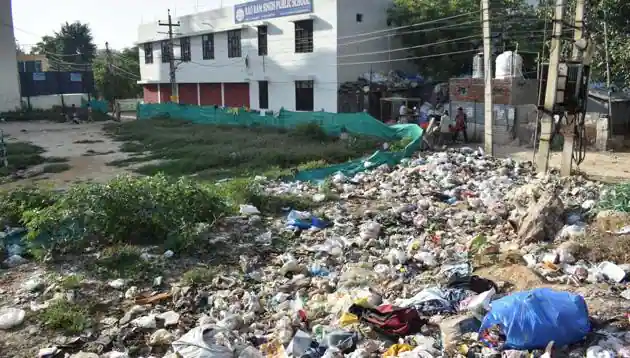
Gurugram experienced an unusually wet winter this time. Rain god obliged and the city had decent rainfall that helped reduce pollution somewhat. Hopefully, all the rainwater did not run off and some did percolate down to raise the groundwater level. Had there been enough means to store this water in the city, it could have served us well in the crunch months of summer. About 60 -70 years back, Gurugram was replete with water bodies that merrily captured both the rainwater and the water flowing downhill from the Aravallis slopes. As per a first-of-its-kind study done by the Gurugram Metropolitan Development Authority (GMDA), the district had some 644 small and large water bodies. Three main data sources — the revenue record of 1956, the Survey of India map 1976 and the world view satellite imagery of 2012 — were used to ascertain this number. Some water bodies were confirmed through only one data source, some through two, but a good 124 water bodies were confirmed in all three data sources. Sadly enough, of the 644 water bodies, 153 have vanished beyond recovery. Another 53 bodies face severe threat due to intentional landfilling, garbage and construction waste dumping, and encroachment. (This comes across as hardly a surprise since land topography has been completely ignored to maximise real estate development in the city. Buildings have come up right upon low-lying places that once had johads (traditional name for ponds and lakes). Besides, another 132 water bodies face contamination due to discharge of industrial affluent and waste water. A good 44 cannot be called water bodies as they experience only seasonal waterlogging. Gurugram must earnestly restore those water bodies that can still be saved. In 2016, a study by Future Institute, an environment consultant, listed 13 ponds in urban Gurugram that could be saved immediately. These are in Sukhrali (Sector 17 C), Ghata (Sector 58), Fazilpur Jharsa (Sector 72), Begumpur Khatola (Sector 74), Garauli Kalan (Sector 37), Badshahpur (Sector 66), Saraswati Kunj (Sector 56), Basai (Sector 9B), Sarai Alawardi (Sector 110), Jahazgarh (Sector 106), Sarhol (Sector 37), Kadipur (Sector 10) and Dhanwapur (Sector 104). Tendering work on Basai and Saraswati Kunj was initiated, but could not be followed through. Of late, the momentum in pond revival has picked up. Gurujal, a society formed by the district administration last year for ensuring water security, is laying down process specifications, technologies as well as facilitating clearances and approvals from government departments. Several Gurugram-based corporates are adopting one pond each and providing CSR funds. Besides, NGOs such as ‘I am Gurgaon’ and ‘Force’ have also taken up pond revival. Funds under central schemes such as Swachh Bharat Mission and Jal Shakti Abhiyan are also available. In the urban areas, ‘I am Gurgaon’ has initiated work in Wazirabad and Sikanderpur ponds. Cleaning water bodies within the populated city is challenging as garbage and waste water continuously flows from the neighbouring settlements. Often, water has to be recirculated through treatment systems to keep it clean. Some of the water bodies in the city outskirts where contractors have started work are Tajnagar, Mojabad, Hariahera, Bohrakalan, Bilaspur, Khentawas, Iqbalpur and Kasan. Reviving a water body has multiple spin-offs. The most important and long-term benefit is the groundwater recharge. The city’s water table has reached a very low level of 35 metres as groundwater extraction has been over 300%. As the city gets increasingly concretised, the ability for ground to absorb water is declining and most rainfall water just runs off that causes flooding. Water bodies act as flood buffers and help stock water that improves the water table. In the rural areas, the water can be used for irrigation and upkeep of animals. By planting native trees around the water body, the local ecology is restored, and birds and butterflies begin to flock the area. Thus, local bio-diversity is encouraged. Walkways and cycle paths can be built around it. Finally, these spaces can be developed as places for social interaction, recreation, education and cultural exchange. Several stakeholders have a role to play. Town planners can ensure that no more construction comes up on water bodies and low-lying areas. Authorities can facilitate through providing access and clearances, removing encroachments, maintaining water quality, etc. But the role of local population is the key; there has to be a complete buy-in from them for ensuring long-term sustainability of the project. A sense of pride and ownership in taking responsibility for the upkeep and maintenance of the pond has to emerge from neighbouring residents. Those who do not have a pond in vicinity can locate a city pond that’s up for revival and volunteer in the area of community mobilisation, greening, landscaping or simply using the facility. Amidst the maddening urban sprawl, water bodies could emerge as tranquil outdoor public spaces to relax, rejuvenate and meet-up while they quietly and silently work to recharge the city’s groundwater. Let’s get water, and with it the birds and butterflies back in Gurugram! (Shubhra Puri is the founder of Gurgaon First, a citizen initiative to promote sustainability in Gurugram through workshops and research books.)

Scroll to Top